






Why this article matters: Capture high-intent buyers comparing two popular education display options.
Why this comparison matters
Schools and training organisations often compare interactive flat panels and projectors because both can support teaching, presentations, and visual learning. The right choice depends on room conditions, usage pattern, and budget priorities.
Interactive flat panel strengths
- Bright image with no shadow from presenter
- Touch interactivity and annotation
- Lower ongoing maintenance in many cases
- Strong fit for collaborative teaching
Projector strengths
- Larger image sizes at more flexible budgets
- Good suitability for large classrooms and halls
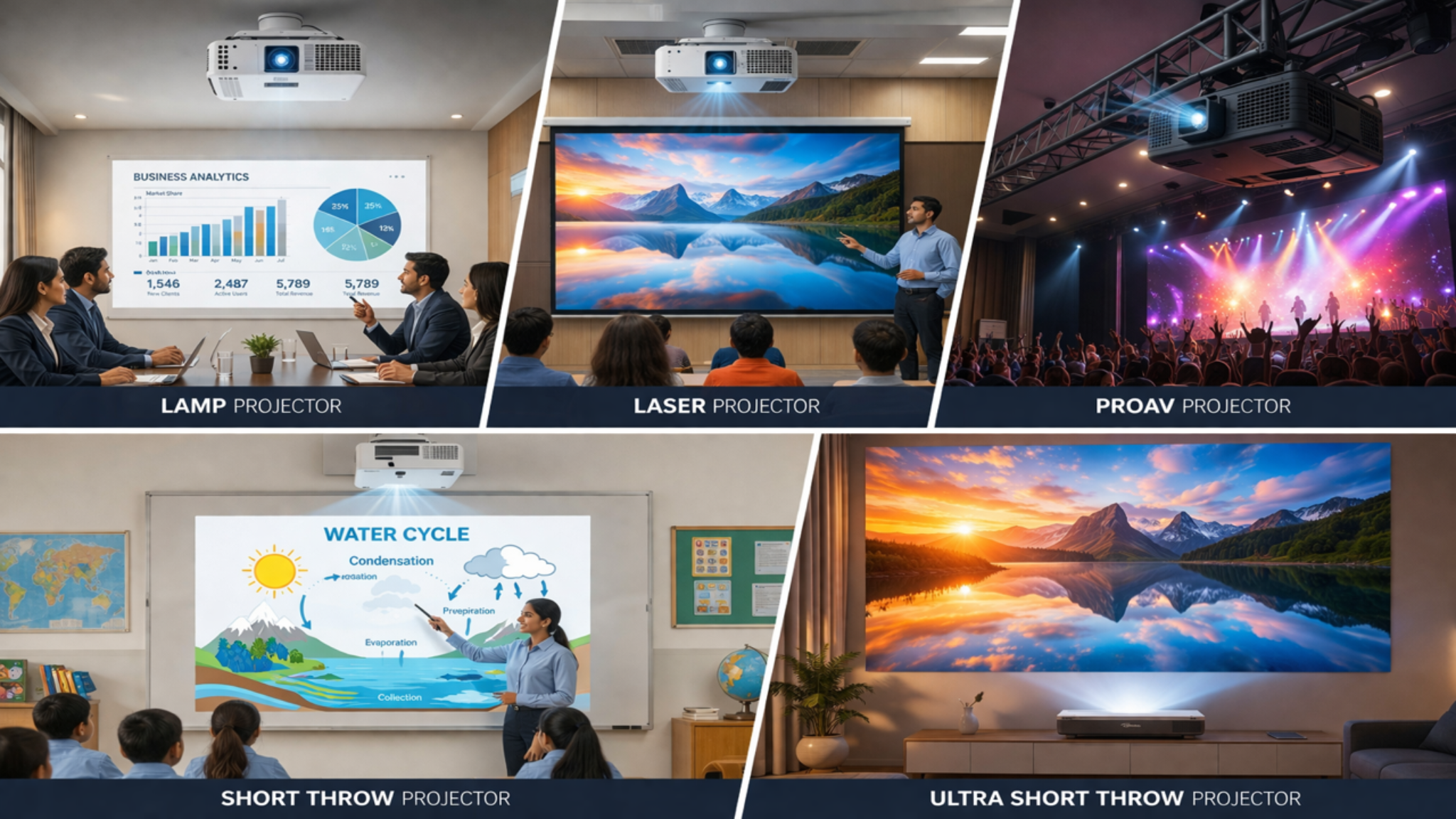
- Flexible options across short throw and standard throw categories
Points schools should compare
- Classroom size
- Ambient light
- Teacher comfort with touch-based teaching
- Budget for hardware and long-term maintenance
- Need for large image versus direct interactivity
Best-fit use cases
Interactive flat panels are often better for classrooms focused on digital content interaction and day-to-day writing. Projectors can still be ideal for large groups, lecture-style teaching, and institutions that need wider image sizes.
How Nexova can help
Nexova Systems can assess your room, teaching method, and budget to suggest whether an IFP, a projector, or a mixed deployment model will deliver better value.
Need help with this requirement?
Nexova Systems supports schools, corporates, institutions, and commercial buyers with solution planning, product recommendation, and deployment support.